


Data center
In today’s digital era, data and connectivity are fundamental to nearly every aspect of modern life. At the heart of this infrastructure are data centers, which store, process, and manage vast volumes of information while supporting the applications that drive our daily digital experiences.
These facilities range from small private server rooms to expansive hyperscale centers housing
millions of servers. Over the past decade, the global number of data centers has surged, fueled by rapid advancements in artificial intelligence and cloud computing—a trend expected to continue.
However, this growth has also introduced significant safety challenges, particularly the risk of fire. In the past five years, several major fire incidents have occurred worldwide, caused by diverse factors such as lithium-ion battery failures, electrical faults, HVAC system fires, and cable insulation issues. These events have led to widespread service disruptions and affected thousands of users.
However, with all this promise comes a very real risk. Hydrogen is colorless, odorless, and non-toxic yet highly flammable when mixed with air. Recent incidents at plants and fueling stations are a clear reminder: hydrogen safety requires technologies built specifically for hydrogen environments
Fire risk
Data centers present a unique fire risk profile that necessitates fire detection systems tailored
to these specialized environments. Standards like NFPA 72 provide generalized requirements,
but they are not sufficient to ensure early fire detection in data centers. The data centers
safety system design needs detailed fire risk assessments covering ignition sources, fuel
loads, and potential fire dynamics.
The fire in datacenter could emanate from electrical faults or stored fuel or similar for which
detection and suppression method are well established.
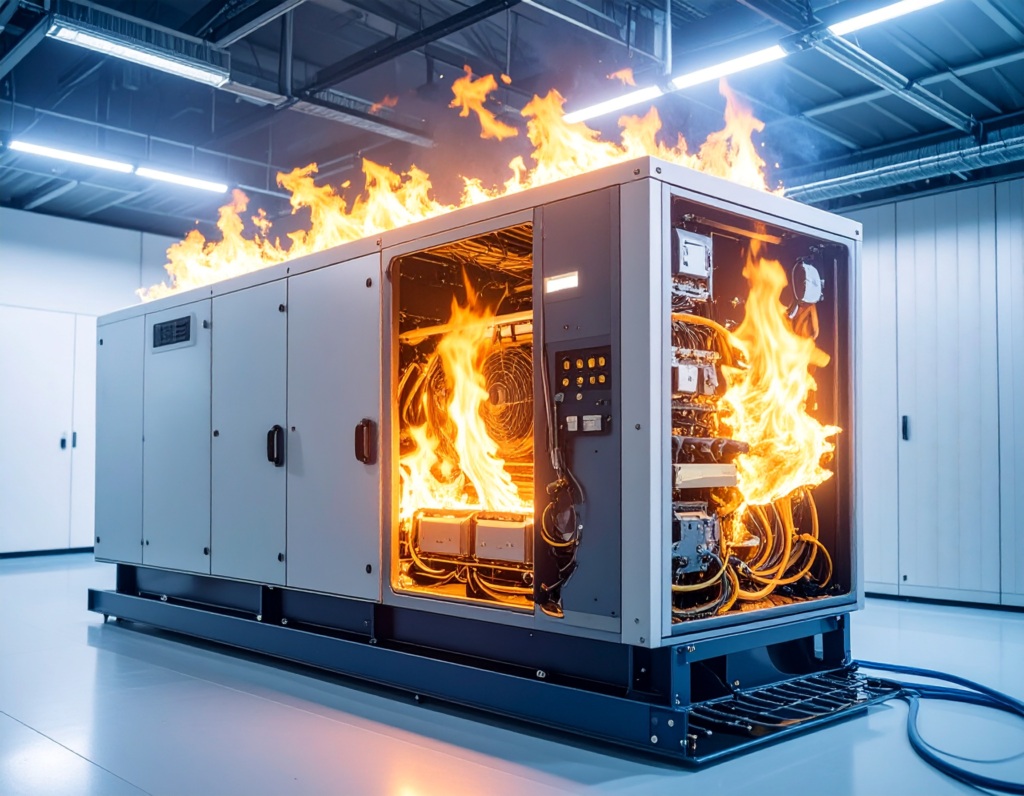
The fire in datacenter could emanate from electrical faults or stored fuel or similar, such as:
– Lithium ion batteries
– Backup generators
– Cable
– Electronic equipment
– Ventilation system
– Raised floor and plenum
As the data center industry scales rapidly, Autronica is uniquely positioned to deliver end-to-end fire and gas safety solutions—from and engineering to commissioning and lifecycle support ensuring compliance,
uptime, and peace of mind for hyperscale and edge operators alike.
Early detection buys time, the faster sensors spot a problem, the safer your data center stays!
Why choose Autronica in data center?
Multi-Technology Gas Detection
Integration of electrochemical, optical IR, and catalytic gas sensors for detecting off-gassing
from lithium-ion batteries
Smart Zoning and Tiered Alarm
Configurable alarm with zone-specific strategies
such as operational zone , detection zone and
alarm zone for staged response to anomalies.
High-Sensitivity Smoke Detection
(ASD)
Laser-based aspirating smoke detection that samples air from multiple zones, detecting
microscopic particles long before visible smoke appears.
Integrated Emergency Shutdown
(ESD) and BMS Connectivity
Seamless integration with Building Management
Systems (BMS) and Emergency Power Off (EPO)
systems.
SelfVerify Technology
Automatically tests every detector, interface, and
alarm device every 24 hours, reducing manual
testing and maintenance costs.
Compliance with Global and Local Standards
Alignment with NFPA 72, 75, 76, and new Norwegian data center safety regulations (2025).